What a tarot reading is
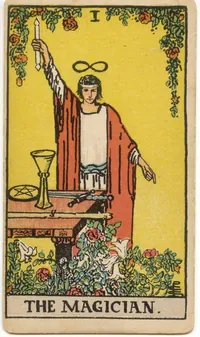
A tarot deck has 78 cards, and every one of them is a picture of a situation people know: a beginning, a quarrel, a celebration, a loss, a decision. A reading puts a few of these pictures side by side, each in a place that has a meaning — the past, an obstacle, advice — and you read the story they tell about your question.
Tarot works best as a mirror rather than a crystal ball. It does not fix the future; it helps you notice what you feel, what you are avoiding and what options you have. Readers who approach it this way find the cards surprisingly precise, because a good reading puts into words something you already sensed.
Know how the deck is built
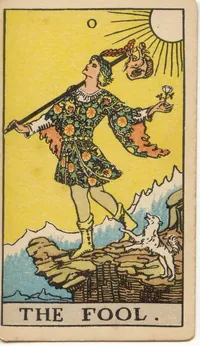
The 22 Major Arcana, from the Fool (0) to the World (21), are the big themes of life: love and choice, power, transformation, hope. When they appear, the matter is important and often beyond your direct control.
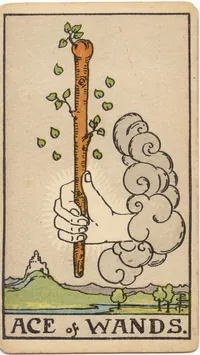
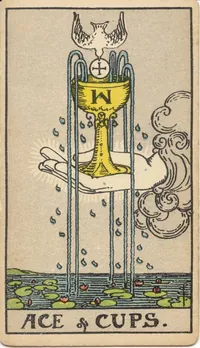
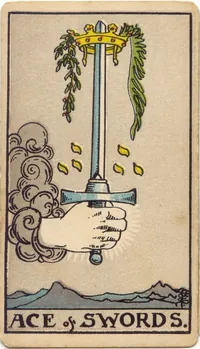
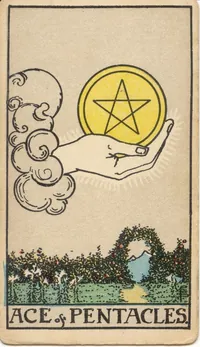
The 56 Minor Arcana are everyday life. They come in four suits, each linked to an element and an area of life: Wands are fire — energy, ambition, projects; Cups are water — feelings and relationships; Swords are air — thoughts, words and conflicts; Pentacles are earth — money, work, the body and the home. Each suit has ten numbered cards, from the Ace to the Ten, and four court cards: Page, Knight, Queen and King. Knowing just this structure already tells you a lot about any card you draw.
Start with a clear question
A reading is only as clear as the question behind it. Open questions work best: “What do I need to understand about my relationship?” gives the cards much more to say than “Will he call me?”. Ask about yourself and your own steps rather than about what someone else will do, and keep to one topic per reading. The guide on questions has examples for love, work and money.
Shuffle and draw
Shuffle while you keep the question in mind, in any way that is comfortable — there is no single correct method. Stop when it feels right, cut the deck if you like and lay the cards out face down in the order of the spread. Then turn them over one by one, so you meet each card on its own before you see the whole picture. Online, the deck is shuffled at random for you, which works the same way.
Read the picture first
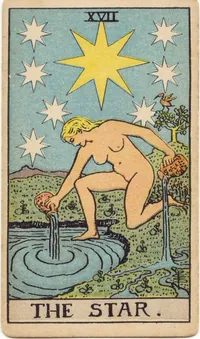
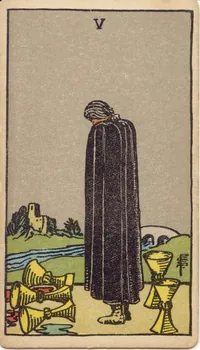
Before you look up a meaning, look at the card. What is happening in it? Who is there, where are they looking, what is the weather, the colour, the mood? The Star shows a woman pouring water under a clear night sky: calm, healing, hope after a storm. The Five of Cups shows a figure mourning three spilled cups while two full ones stand behind — grief, but also what is still left.
The Rider–Waite–Smith deck of 1909 was drawn to be read this way: every minor card is a scene, not just a number of symbols. Your first impression of the picture is often the most accurate part of the reading, and the book meaning then confirms and deepens it.
Read each card in its position
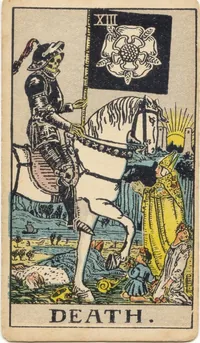
The same card means different things in different places. Death in the past position speaks of an ending that has already freed you; in the future position, of a change that is coming; as advice, of the need to let something go. Read the position first, then the card, and ask how this card answers what the position asks.
This is why spreads exist: they give each card a question. The three-card spread asks about the past, the present and the future; the love spread about you, your partner and the bond; the Celtic Cross about ten sides of one situation.
Turn the cards into one story
When all the cards are open, step back and look at the spread as a whole. Many Major Arcana mean the situation is important and part of a bigger lesson. A majority of one suit shows the real area of the question: Cups for feelings, Pentacles for money and work, Swords for conflict and thought, Wands for action. Repeated numbers repeat a theme: several Fives point to change and tension, several Aces to new beginnings. Reversed cards show where energy is blocked or turned inwards.
Then tell the story in your own words, from the first card to the last, as if you were explaining it to a friend. If two cards seem to contradict each other, that tension is usually the heart of the answer.
Practise a little every day
The fastest way to learn is one card a day. In the morning, draw a card and note what you think it will mean; in the evening, write down how the day went. After a month you will know the cards from your own life rather than from a book, and your readings will become noticeably more confident. A free card of the day on this site and in the Telegram bot is an easy way to begin.
Questions and answers
Can anyone learn to read tarot?
Yes. Reading tarot is a skill like any other: it needs attention to the pictures, knowledge of the structure of the deck and practice. Intuition grows with experience; you do not need a special gift to start.
Do I need to memorise all 78 meanings?
No. If you know the meaning of the four suits, the ten numbers and the court ranks, you can work out most of the Minor Arcana by yourself. Learn the 22 Major Arcana gradually, one or two a day.
Can I read tarot for myself?
Yes, and most people start that way. The only difficulty is staying honest: when you are anxious about a question, it is easy to read only what you want to see. Writing the reading down helps.
Which deck is best for beginners?
The Rider–Waite–Smith deck of 1909, the one used on this site. Every card is an illustrated scene, so you can read the pictures even before you know the meanings, and most books and websites refer to it.