What a reversed card is
When you shuffle, some cards turn around, and in the spread their picture appears upside down. Many readers give these reversed cards a meaning of their own, which doubles the vocabulary of the deck from 78 to 156 meanings. Others read every card upright. Both approaches are valid; what matters is that you decide before the reading and keep to it.
On this site and in our bot about a third of the cards come out reversed — often enough to matter, not so often that every reading turns gloomy.
Do you have to read reversals?
No. Beginners often find it easier to learn the upright meanings first and turn every card the right way up. Even without reversals, a spread has nuance: the positions, the neighbouring cards and the overall balance of the suits change each card’s meaning. When the upright meanings feel familiar, start reading reversals — they add depth and precision.
Five ways to read a reversed card
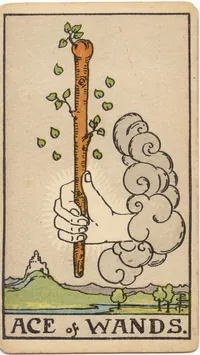
Blocked or delayed: the energy of the card is there but cannot come through yet. The Ace of Wands reversed is a project that does not start.
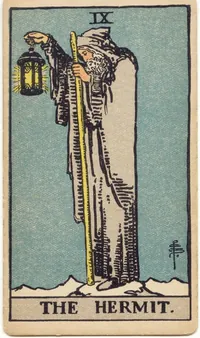
Inward: the card’s theme is happening inside rather than outside. The Hermit reversed may be a loneliness you feel among people.
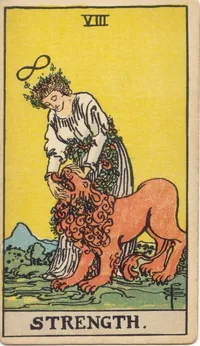
Too much or too little: the quality of the card is out of balance. Strength reversed can be self-doubt — or force where gentleness is needed.
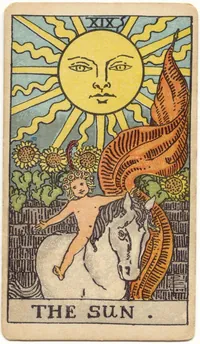
The opposite: the card’s meaning is turned around. The Sun reversed is a cloud over a joy.
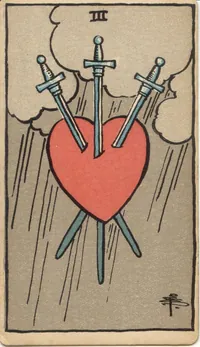
The way out: for a difficult card, reversed often means its worst is passing. The Three of Swords reversed is a heartbreak beginning to heal.
Examples
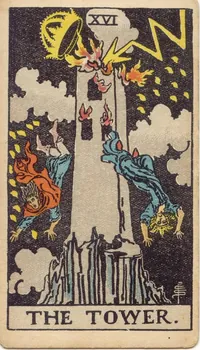
The Sun reversed rarely means misfortune: it is a joy dimmed by worry, success that comes more slowly, a child within you who needs play. The Tower reversed is a change you are resisting, or a crisis that comes gently, step by step instead of all at once. The Three of Swords reversed is recovery: the pain is still there, but the swords are already falling out of the heart.
As you see, a reversed card is read in its own spirit, not simply as the opposite. The card’s page on this site gives both meanings, upright and reversed, for every area of life.
When many cards are reversed
One or two reversed cards in a spread are normal and point to where things are stuck. If most of the cards are reversed, look at the whole situation: something important is blocked, you may be resisting a change, or the time is simply not right yet. Such a reading often advises patience and inner work rather than action. A reversed Major Arcanum weighs more than a reversed minor card: it marks a big theme that has not yet unfolded.
Questions and answers
Are reversed tarot cards bad?
Not necessarily. A reversal changes the way a card’s energy works — blocked, delayed, inward — and for difficult cards it often softens the meaning. Read it together with the position and the neighbouring cards.
Why do I keep getting reversed cards?
It may be how you shuffle: cards that are turned in one shuffle stay that way. If the shuffle is fair, many reversals point to a period of inner work, delays or resistance to change.
Should beginners ignore reversals?
It is a reasonable way to start. Learn the upright meanings first, then add reversals when you feel comfortable — they make readings more precise.