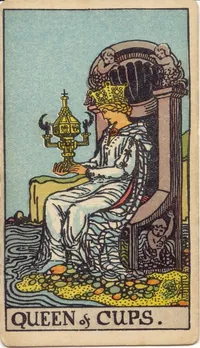
Who the court cards are
Each of the four suits has four court cards: the Page, the Knight, the Queen and the King. That makes sixteen characters, and each combines a stage of maturity, given by the rank, with a temperament, given by the suit. The Knight of Cups is the romantic in action; the Queen of Pentacles, the practical and caring one; the King of Swords, the clear, fair mind in authority.
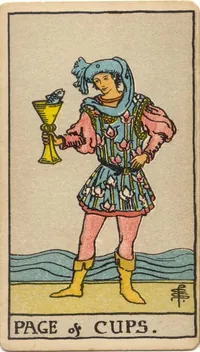
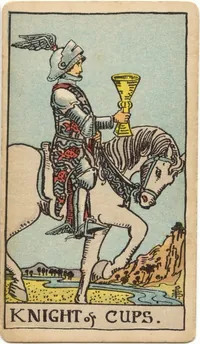
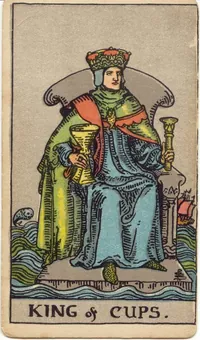
The four ranks
The Page is the student and the messenger: curiosity, a first step, news. The Knight is movement and pursuit — the energy of the suit in action, often in excess. The Queen is mastery turned inwards: she understands, cares and holds the energy of the suit. The King is mastery turned outwards: he leads, decides and takes responsibility. Read in order, the four ranks are a path from learning to leading.
The four suits as temperaments
Wands are fire: bold, passionate, creative, sometimes impatient. Cups are water: sensitive, romantic, empathetic, sometimes moody. Swords are air: sharp, rational, direct, sometimes cold. Pentacles are earth: reliable, practical, patient, sometimes stubborn. A court card is its rank seen through its suit: the King of Wands leads with vision, the King of Pentacles with steady work.
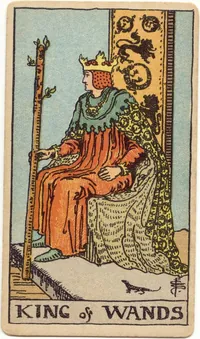
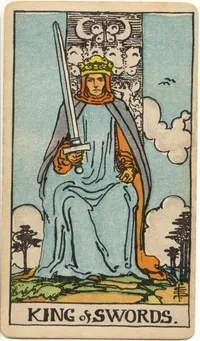
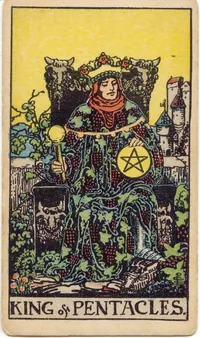
Three ways to read a court card
A person: the card describes someone in your situation — a partner, a boss, a friend. Rank and suit tell you how they act, not their age or gender: a King can be a woman, a Page an adult.
You: the card shows the part of yourself that the situation calls for — or the role you are playing. The Queen of Swords as advice can mean “be honest and set boundaries”.
A situation: the card shows the energy of the moment. Pages often bring news, Knights fast movement, Queens and Kings a matter that needs maturity and control.
The position helps you choose: in “Your partner”, it is a person; in “Advice”, it is usually you; in “Outcome”, the energy of the situation.
Tips for reading court cards
Look at the picture: the direction the figure faces, whether they are sitting or moving, what they hold. Compare court cards that appear together — two Kings may be a negotiation, a Knight and a Queen a meeting of energy and care. And do not take age or gender literally: the court cards describe ways of acting, which belong to anyone.
Questions and answers
Does a court card always mean a person?
No. It may describe someone else, a part of you or the energy of the situation. The position in the spread and your question usually tell you which.
Does the King always mean a man?
No. The ranks describe ways of acting: a King leads and takes responsibility, a Queen understands and nurtures. Anyone can embody either.
What if a reading is full of court cards?
Many court cards mean that people, roles and relationships are at the centre of the situation — or that many voices are involved. Ask yourself who each card might be.